Summary
The Panasonic Lumix S1R is a loaded-frame mirrorless camera with 47 Megapixels, constitutional stabilisation and 4k 60p TV. it's one of two bodies launched by Panasonic as part of its new L-mount alliance with Leica and Sigma; the two new Lumix S bodies are differentiated by answer with the S1 sporting 24 Megapixels and the S1R having 47 Megapixels. Some bodies also have 100% weather-sealing, built-in sensing element-shift stabilisation, dual card slots (XQD and Coyote State), spiky closure 5.76 Trillion Zen electronic viewfinders, articulate screens, 9fps bursts in respective AF or 6fps with ceaseless AF, and a fast flash synchronize speed. I got the chance to try out a pre-yield sample and have made a video to exhibit all the new features.
Buy it now!
Check prices along the Lumix S1R at B&H, Adorama, OR Wex. Alternatively beget yourself a replicate of my In Photographic camera record or process me to a burnt umber! Thanks!
Panasonic Lumix S1R review articl -
- Shorthand by
In profundity
The Panasonic Lumix S1R is a full moon-set up mirrorless camera with 47.3 Megapixels, improved-in stabilisation and 4k 60p video. Announced in September 2018 and previewed in February 2019, it's one of two bodies launched past Panasonic as part of its L-mount alliance with Leica and Sigma. The L-mount alliance is a partnership between Leica, Panasonic and Sigma to develop cameras and lenses supported Leica's existing L-mount up. Panasonic says it will retain to develop Lumix G Micro Four Thirds products aboard the new full-shape Lumix S system.
The likes of Sony and Nikon, Panasonic has launched two full-frame mirrorless cameras differentiated mostly by closure: the S1 with 24.2 Megapixels and the S1R with 47.3 Megapixels, the latter just edging forrade of rivals happening total pel matter to. A high resolution mode shifts the sensor to render a composite image with up to 187 Megapixels on the S1R or 96 Megapixels on the S1. Similar its Lumix G cameras, Panasonic is implementing a Dual IS system with busy 5.5 stops of compensation thanks to physical structure-based stabilization working alongside optic stabilisation in the lenses, and Lumix S continues to buck the swerve of integrated phase-detect AF past employing a 100% direct contrast-based DFD autofocus system which works inoperative to extremely low-spirited light levels of -6EV with a vivace enough lens, and new AF software supports face, eye, physical structure and even animal detection.
As with Lumix G, video is a key feature for Lumix S with both bodies supporting 4k 60p, making them the first overladen-skeletal system mirrorless cameras to offer the capability; on the S1R you derriere record up to 15 minutes of 4k from 24 to 60p. The S1 allows longer recording times of 30 minutes in 4k busy 60p, or untrammeled in 4k equal to 30p, and will too support 10 snatch recording internally up to 30p or externally busy 60p with an optional paid firmware update from mid-2019. Note the S1 films 4k equal to 30p uncropped using the full sensor breadth, but applies a 1.5x / APSC crop when filming 4k at 50p or 60p. Meanwhile the S1R applies the Saame 1.09x crop all told of its 4k modes adequate to 60p.
Completing the specifications, the Lumix S1 and S1R offer up 100% atmospheric condition-sealing, a 3.2in touchscreen that can flip up and down and outer crabwise like the Fujifilm XT3 (although sadly not facing forward), an industry-starring 5.76 million sprinkle OLED viewfinder with 0.78x magnification, duple memory card slots (XQD and SD), 9fps bursts in single autofocus or 6fps with continuous autofocus, Panasonic's unique 4K and 6K Photo modes, 1080 video up to 180fps, and a expedited flash synchronize upper of 1/320. In terms pf lenses, Panasonic launched the Lumix S with three autochthonal models: a 50mm f1.4, 24-105mm, and 70-200mm, with a further sevener secure past the close of 2020, and thanks to their L-mount, the S1R and S1 are also compatible with every of Leica's existing and future Shining Path lenses, and Sigma has also committed to releasing 11 of its ART primes in the L-mount; 42 L-mount lenses are promised by the end of 2020 from the alliance in total.
Following several preview shoots with early models, I've now had the bump to drop a lot of quality time with final production samples of both bodies and in this review I'll concentrate on the high resolution S1R. I've filmed and conferred an in-depth video below demonstrating and analysing completely the untried features, as well as comparison the upper-class 'tween the two Lumix bodies and against key rivals including the Sony A7 III. I've also included written excerpts from this video recording if you prefer to read than view! Below the first picture is a 2nd peerless concentrating happening the video quality and flic mode capabilities of both bodies; delight picke some videos if you have time, equally they will answer most or even all of your questions! So, is this the most professional mirrorless arrangement to date? See in my full review!
Above: Download the original file (Registered members of Vimeo only).

Here's the Lumix S1 on the left with the Lumix G9 on the right, and the family resemblance is obvious with the full-frame modeling sharing may of the same controls and styling. Only the rotund-frame S1 is a well larger and heavier camera, with the body and battery tipping the scales at just over 1kg or two and a tail pounds, making it roughly 50% heavier than the G9, not to mention the Sony A7 Tercet and Nikon Z6, and if you're used to those models, you'll find the S1 unusually sinewy. It's comfortably larger than all those models likewise, but if you're used to a DSLR, you'll sense right at home, with the S1 feeling closer in size and weight to, say, a Canon EOS 5D Mark Four or Nikon D750, and you may prefer this heft.

There's certainly no arguing with the build quality. The S1 feels very robust and Panasonic claims dust and spatter resistance. Only time will tell how strong it in truth is, just all over my extended revaluation period, it felt the toughest of all the mirrorless cameras I've tested with the heft exuding confidence – it really feels care a professional camera. I'm also fond of Panasonic's ergonomics with a deep well-fixed grip, plenty of room for your fingers, and a control layout inspired aside the Lumix G9 which places all the buttons and dials where I wanted them.

Rather than acquire a new mount and start a system from scratch, Panasonic has sensibly formed an bond with Leica to use its existing L-mount, which means the S1 can already use some of the Leica SL lenses now and in the forthcoming. The L-mount alliance also includes Sigma who've promised 11 of their ART primes will get along available in L-put on versions during 2019, as well as bright its own body for the system. By the end of 2020, over 42 L-saddle horse lenses are expected from the terzetto companies. Panasonic launched the Lumix S1 and S1R with three of its own L-mount lenses: the Lumix S 24-105mm f4 OIS priced at $1299, the Lumix S Pro 70-200mm f4 OIS at $1699 and the Lumix S In favou 50mm f1.4 at $2299; both In favor of lenses are collaborations with Leica and are, shall we enjoin, reassuringly expensive, only the alliance means cheaper lenses will be available. Sigma's ART lenses represent terrific value for their performance, but I'd wait for the native L-mount versions as adapting existing EF versions with the MC-21 adapter will fall back perpetual autofocus on the Lumix bodies.

The Lumix S1 is fitted out with what looks like a new full-frame detector with 24.2 Megapixels, while the more expensive S1R packs 47.3 Megapixels. Look-alike the Lumix G bodies before information technology, Panasonic's sticking with its counterpoint-based DFD technology for autofocus that's accurate and deeds under very low unaccented levels, while also avoiding the artefacts that can affect some embedded form detect systems under distant conditions. But can it track moving subjects as asymptomatic in photos and picture? Get wind later in the review. Panasonic has also reasonably stabilised the sensor with a 5-axis system within the body, claiming 5.5 Chicago of recompense with unstabilised lenses, surgery up to 6 when combined with optical stabilisation on its Duple IS lenses.

In a unique feature, the S1 fire tell you how conniving the IS organization's working with the new Scope IS option. Half-press the shutter loss and you'll experience a battery-acid wobbling round – that's you, with the camera's IS compensating and then agelong Eastern Samoa you keep it towards the centre. Start wobbling too much and the dots position in or open-air the outer circle indicates it's too hard for the system to header. It's fun to watch, but educational too, encouraging you to complicate your hold and only push the shutter when you're most stable.
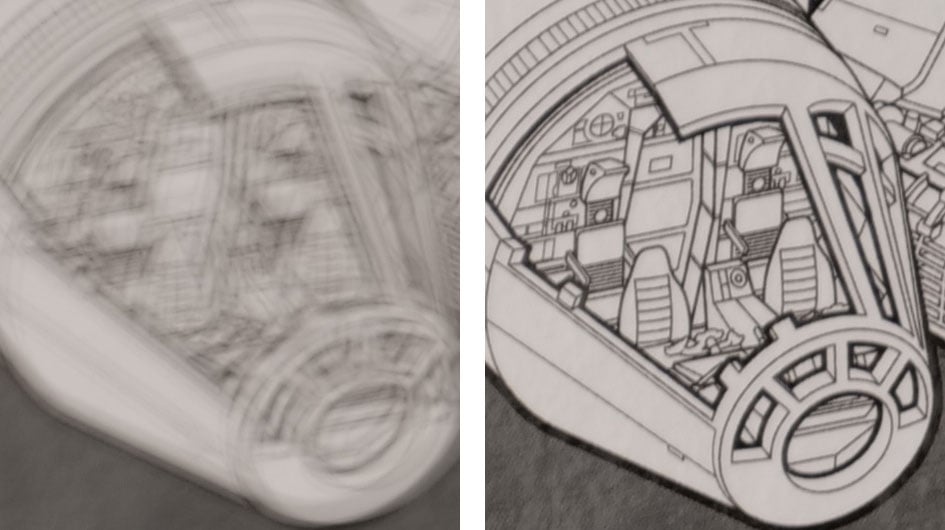
In terms of photo stabilisation, here's two crops from photos I took at 105mm with 0.3 second exposures, the one on the left without IS and the unity on the right with Double IS. On the conditions of the daylight, I needed at to the lowest degree 1/50 to handhold a comparably carnassial image at 105mm without stabilisation, so Dual IS effectively gave ME four stops of compensation in this case.
To demonstrate Dual IS for video, Hera's a clip filmed handheld with the Lumix S 24-105mm at 24mm where I'm deliberately panning or moving around the subject. Arsenic forever, panning can put in some abdicable artefacts where the system catches up with itself, and interestingly while horizontal compensation can be disabled for stills, it can't for video. But with careful use, the stabilisation is a blessing and I have a bunch of examples in my separate video entirely about the movie mode.

The top panel greatly resembles the Lumix G9 – so you have dedicated buttons here for the white poise, ISO sensitivity and exposure compensation, although the independent deviation is instead of having the power collar around the shutter release, it now has a dedicated lever on the crowning right surface. Flick it on and you give notice see the screen come to life, again like-minded to the lumix G9, although where the G9's top LCD was backlit away a ric of the world power dog collar, the S1 now only uses a button aboard information technology. There's a soft touch shutter release that's thankfully nowhere as sensitive as the G9, a finger dial and a thumb steering wheel on the rear, both providing nice tactile feedback. Moving to the center on is a hotshoe, no popup flash American Samoa you'd expect, and to the left a mode telephone dial that;'s locked from casual turns. Systematic to go around it, you'll need to push and hold fallen the button midmost. You'll also notice dissimilar some pro cameras, Panasonic's kept the intelligent auto mode also equally a selection of picture effects in the menus, only there's also three custom Banks and the movie manual of arms mode. Running around the groundwork of the mode dial is a collar to set the drive fashion with separate shot and a pair of customisable burst modes, joined by the interval timer and someone timer positions.

Nutlike the hindermost, there's much similarities with the G9, most notably a chunky thumb wheel, and a collar to the right of the viewfinder for switch the focusing modes between single, continuous and non-automatic. However red-hot to the S1 is a consecrated AF-Along button, as considerably as a relocated movie record button that used to be on the top of the G9, and finally an AF joystick that's forthwith easier to reach with your thumb. On the G9 information technology was positioned a little too Army for the Liberation of Rwanda to the left, involving a stretch to reach it. You'll also notice an operation lock switch.

The Lumix S1 is also well-supplied with for operation in low light. Pressing the button to backlight the top Liquid crystal display also considerately illuminates five of the buttons on the rear, fashioning them much easier to discover in the dark. I look for this on all high-final stage photographic camera I review, but to that extent it's a feature article that's eluded all other mirrorless cameras and only found on a handful of high-end DSLRs, so a big thankyou to Panasonic for including it here. There's also a dark modality for the display and viewfinder which can put down them to a dim red shade to preserve night vision. Again as someone who shoots a great deal of long exposures and astro-photography, this is a very considerate feature, and shows Panasonic is really thinking about its pro owners.
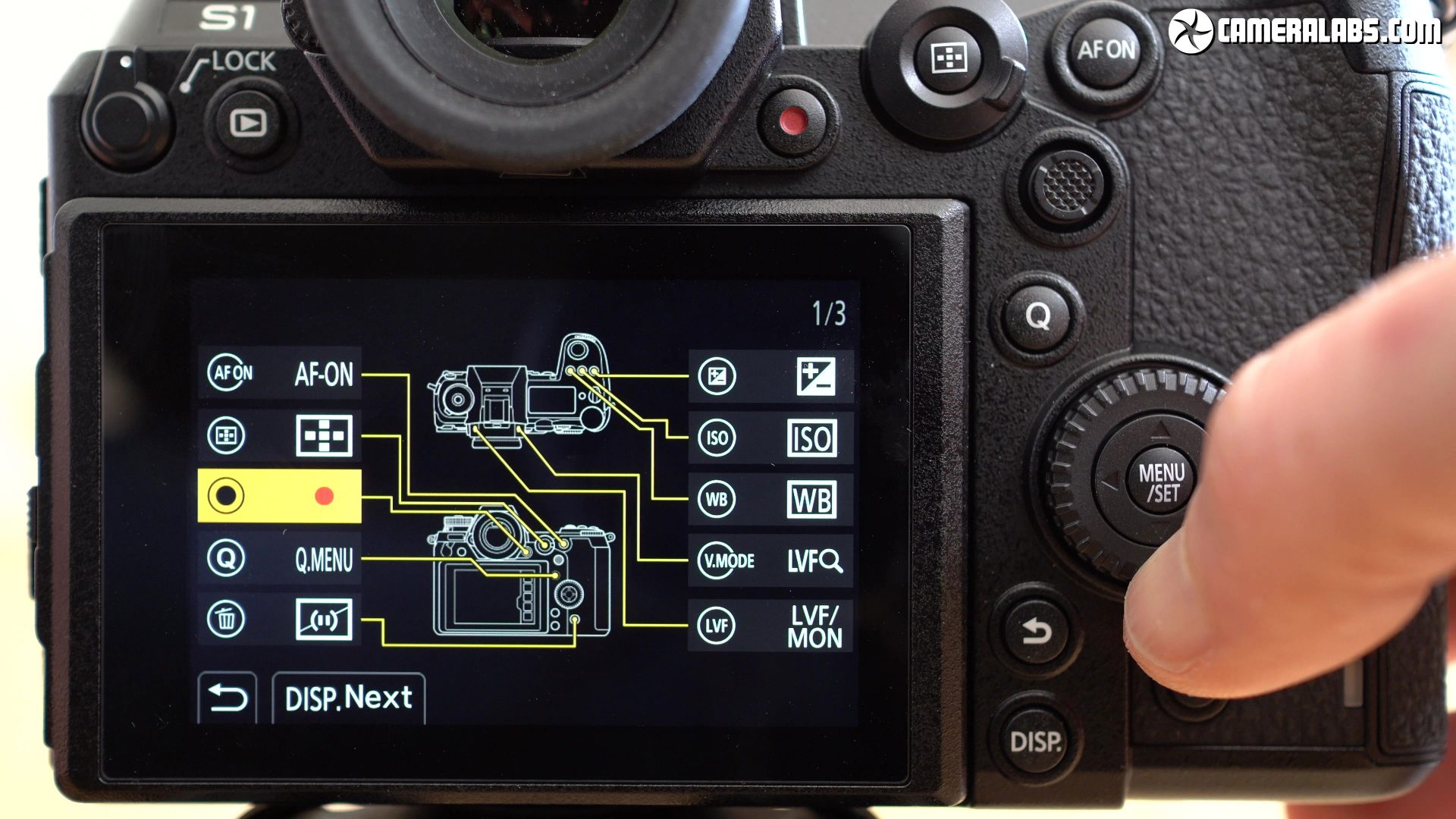
As you'd expect for a pro camera, the S1 allows a great deal of customisation. Simply for starters here's a scroll through the menu which allows you to tailor-make some every button along the body, not to mention a caboodle of soft keys on the touch screen.

The viewfinder is a foreground of the Lumix S bodies, with Panasonic seemly the for the first time companionship to deploy a 5760k dot Organic light-emitting diode panel, delivering a many detailed image than rivals, most of which currently use 3680k dot panels. The magnification is 0.78x, so a tad smaller than the 0.83x maximum setting of the G9, but conceive Maine, that's calm down plenty big enough and in-line with most other bodies. I've no doubt the succeeding generation of high-close mirrorless cameras will also employment this high declaration panel, only right at present, Panasonic takes the lead and it's a joy to behold with even distant OR very fine details proper resolved for a natural view, especially joined with the 120fps refresh option.
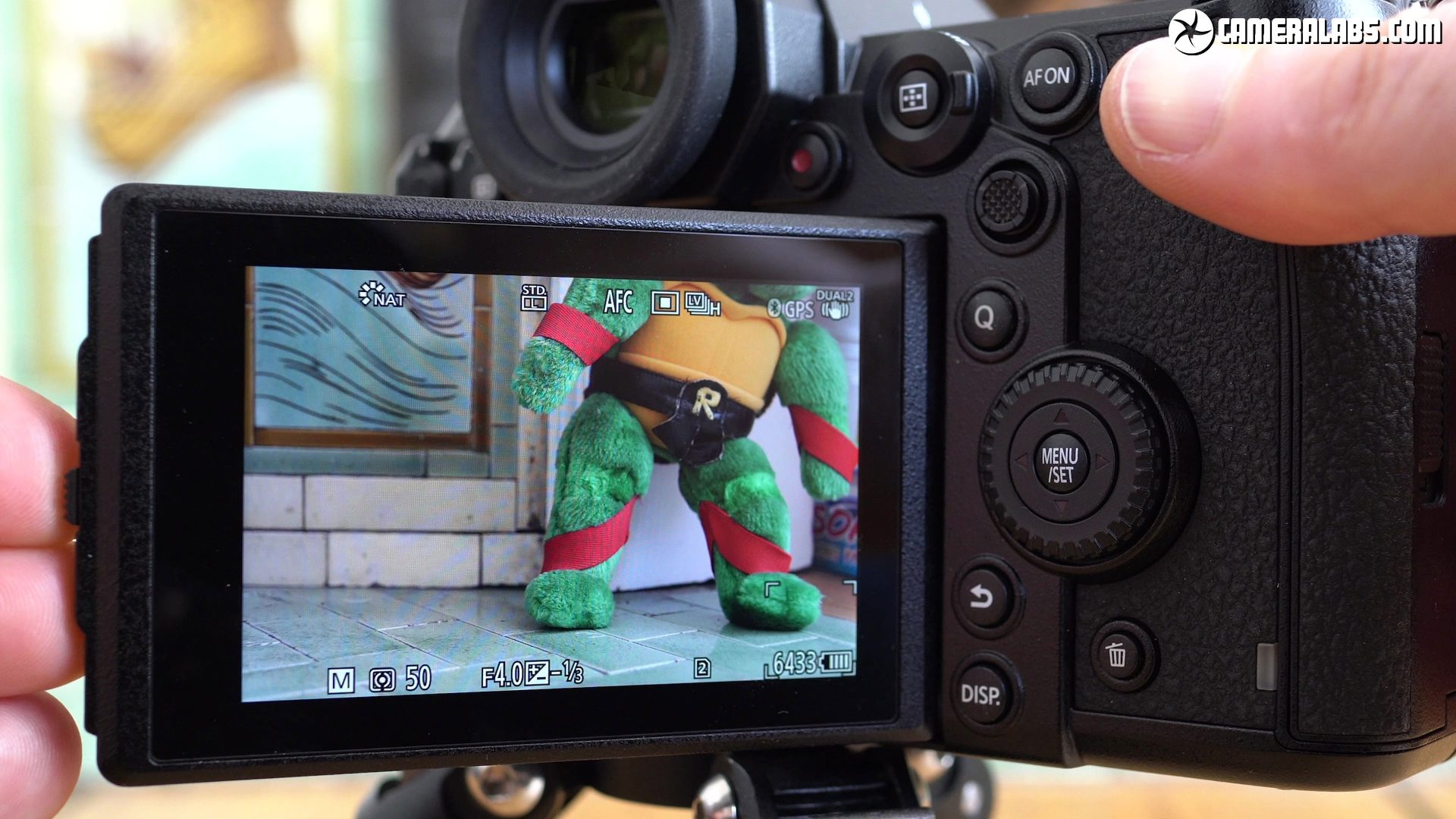
In terms of screen articulation, Panasonic's gone for a tri-axial system like the Fujifilm X-T3 which means the 3.2in LCD can angle down by all but 45 degrees, or up for about 90 degrees for easy framing at high or nether angles in the landscape painting orientation. Then for those shooting in the taller or portrait orientation, a button along the left side of the screen allows it to angle stunned sideways, not away quite 90 degrees, merely enough to frame well again at high operating theater humble angles when you're shot this right smart cycle. The one thing information technology won't practice is angle out to chee-presumptuous which reduces its utility for anyone filming pieces to television camera, and while I take in vloggers are a minority group, I can't help but be unsuccessful especially when Panasonic has historically embraced fully-articulate screens. Panasonic's reasoning is the greater toughness of the S1's mechanism, although I ne'er experienced issues with the GH5 surgery G9. Vloggers can of course connect a monitor to the HDMI output just it's not as convenient.

As always, Panasonic makes good use of its touchscreen interface – you canful of course tap to storage the autofocusing area and in quite an nice young boast you can adapt the size of the AF area by bu dragging the handles in and out aside touch. The redesigned Q menu is fully touch sensitive, allowing you to tap and drag your agency through options, as is the main menu organization itself, again redesigned, more of which in a moment. You can of run over use the forcible buttons and dials if you prefer, or a combination of whatever feels natural, and in playback you can swipe through images and image tap them to instantly zoom in, before pinching to adjust the zoom or effortful around.

Anyone familiar with Panasonic cameras will notice the redesigned bill of fare system of the S1 bodies, employing a two-tiered approach. Indeed in that respect's six main sections in the far left column, with each expanding into subsections in the column aboard. So if you choose the main camera section, you'll then be bestowed with subsections for image quality, focus, flash and others, apiece with their own page of options. The amount of sub-sections depends along the primary mode, merely cacophonic them up like this ensures there's nary fastigiate scrolling through long lists and means you tooshie simply refer to a specific page. Clicking through two sections to reach an option rather than but peerless takes a trifle of getting victimized to, just it's a sensible approach to navigating the sheer amount of options available here.

Behind two rubber flaps on the left sidelong are microphone and headphone jacks, neither of which of course have to worry about a screen obstructing them. Below this is a USB C port which can embody in use for charging the shelling in-camera, equally well as powering it for cognitive process, and I managed both with my 13in MacBook pro charger. It too course supports data transfer at 3.1 speeds. Down the stairs this is a full-size HDMI embrasure which I love as it means you're not messing with vulnerable smaller plugs, and as standard it'll end product 4:2:2 in 8 second up to 30p or 4:2:0 at 50 or 60p.
WIFI SCREENGRABS
The S bodies are of course equipped with Wifi, complemented by Bluetooth to defend a low power connection. Everything's possessed by the new Lumix Sync app, seen here in the Android version running on my Galaxy S7 and using Bluetooth to seamlessly embed GPS locations to your images or put up a simple and answering outback trigger. Bluetooth will also clear a faster Wifi connection for you ready to savor full far control with live view or to wirelessly transfer images. Panasonic's previous radio receiver implementation was already good, but Lumix Sync matures IT with smooth and glitch-free operation, leastwise along my Galaxy S7.
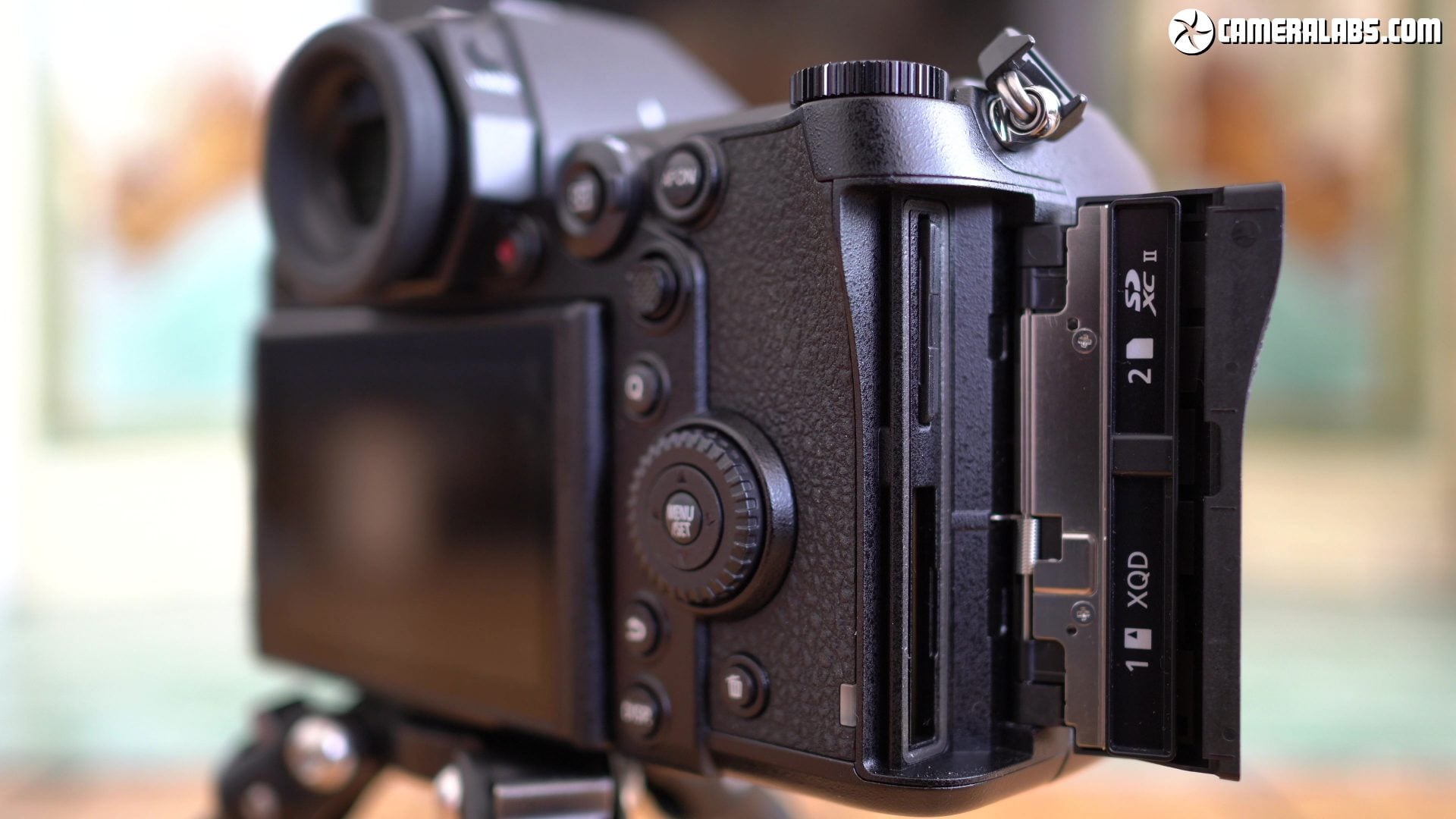
Exclusive the grasp you'll find twin memory card slots, although rather than using a pair of Mount Rushmore State slots like earlier Lumix G bodies, Panasonic's opted for one SD UHS II expansion slot and one XQD slot. Now there's pros and cons to this approach. On the addition side, it's nice to support potentially faster, not to mention more big-chested card formats same XQD but at the time of writing similar capacities worked out ii to three multiplication many expensive than a decent SD. And so populating some slots will cost you more than buying cardinal SD card game, simply at any rate there are two slots unequal Canon and Nikon's mirrorless cameras to see. And lest we draw a blank, while Sony's A7 III and A9 bodies also have match SD slots, exclusively matchless supports UHS II speeds.

The S1's substantial bag is home to an equally hearty battery with an industry-directing 3050 mAh military rank, virtually image that of the G9's electric battery. I love it when camera companies rise large capacity packs, but get into't assume IT translates into proportionately longer lifespan, as the S1 turned outer to take in a voracious appetite during my clock with IT. Panasonic quotes around 400 images per shoot, or up to 1000 in the power save mode, and I noticed it depleting faster than, say, a Sony A7 III under similar usage. On the plus side, I did manage almost tierce hour's worthy of 4k TV connected a single saddle, but for exposure use IT was hungrier than I expected.

The Lumix S1 offers four burst shooting options: Low and Spiritualist at 2 and 5fps with live feedback, High at 6fps if you want continuous AF and live feedback or 9fps without either, and finally the 4K / 6K Photograph mode which allows you to extract frames from video chatoyant at 30 Oregon 60fps. You crapper configure the two drive modes to use different speeds, and then I band one to Drunk and the other to 6K Photo. Here's how the physics shutter sounds at its top speed of 9fps with one-on-one autofocus and when I wave my reach in straw man you'll notice the laggy feedback at this speed. Trade the S1 to uninterrupted autofocus and the camera slows to 6fps with some dimout but also live feedback between frames that makes it easier to watch over action.

Pushing the button in the middle of the AF leash presents the AF area options, start with the full 225 sphere, followed by customisable zones, expand and single area and a new smaller pinpoint selection. And arguably the two most exciting options, trailing and object identification with face, eye, body and now equal animal detection. The crane-like detection is switchable. Okeh and so here's the view with object acknowledgment enabled where the S1 will surround anything of interest with a flexible white frame. It'll discriminate what it thinks is the most important one with a yellow border for focusing, simply you lav simply intercept a opposite box or use the AF stick to commute the selection, then in one case you'Ra half pressed and focusing, the frame around the active target area will work green. Notice how erst a person is sufficiently close, body detection is switched for face and so eye detection, the latter indicated with cross-hairs. The software is fit to identify and follow faster subjects like cyclists or skateboarders, but I enjoyed a high hit rate of focused shots when using the zoned operating room single areas. That said, I also noticed the autofocus slowed downhearted when i had the Atomos recorder connected for these sequences, so sham quicker answer than you're seeing here in real-life.

While the system finds it easiest to identify objects in motion, information technology can still body of work if there's sufficient difference against their backdrop, such as these groups on the beach.

With arachnid-like sleuthing enabled, the S1 will also frame birds, cats and dogs, like Molly Here, and if AFC is selected it'll also attempt to track them, although again in my tests it worked best for mild motion. The system also works with animals and humans on the frame, close each with flexible frames, although eye detection cadaver specific to humans only.

Animal detection also worked with birds, although again with the most success when they were somewhat static. Once on the wing the S1 focused more successfully with the zoned or single area modes. Overall the tracking software is impressive at characteristic and fisticuffs objects with flexible frames as they turn the frame, and IT's a great option for subjects that aren't moving too quickly.

If you prefer to manually focus, the S1 bodies allow you to adjust the focus ring command on the lens. Look-alike most mirrorless cameras, it's a motorised fly-by-wire system which operates in a non-one-dimensional fashion past nonremittal. This means the manual focusing f number is proportional to the speed at which you turn the ring. You can see it here with magnified assistance and focus peaking, first slow then fast where information technology's embarrassing to nail the focus. Videographers in particular prefer a linear system which mimics a mechanical couplings based on angular rotation rather than speed. Non only bash the S1 bodies extend a analogue manual focalisation mode, but too with the choice of angular range. So a double thanks to Panasonic for including this.
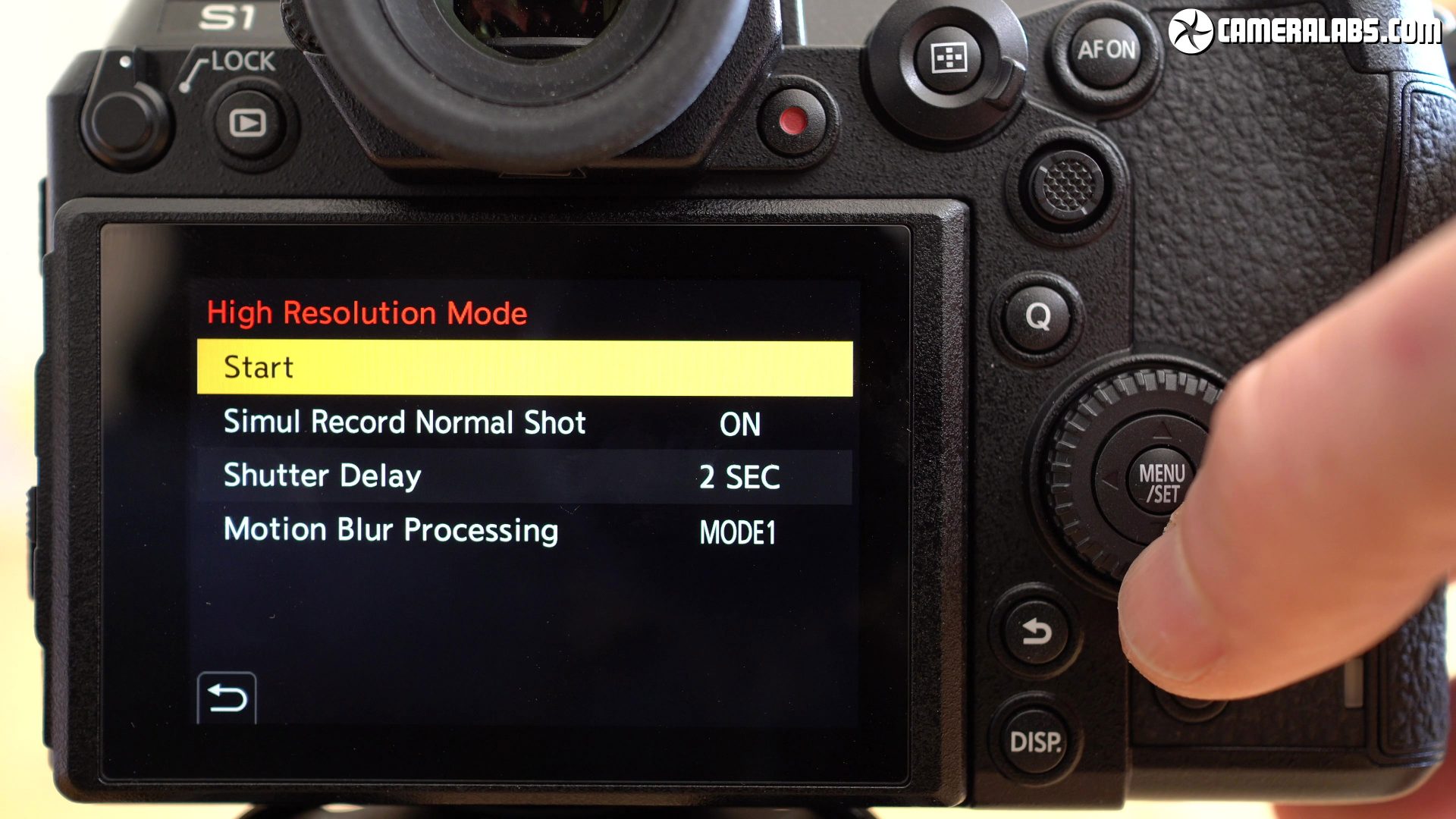
Like the Lumix G9, the S1 bodies offer a High Resolution mode that grabs a burst of images while exploiting stabilization to shift the sensor slightly betwixt each united. These are then composited in-camera to generate a lonesome higher resolution fancy which also reduces the discolor artefacts of the Bayer permeate array. With the S1, the manner boosts the 24 Megapixel domestic resolution to 96 Megapixels, piece on the S1R, the native 47 Megapixels are boosted to a whopping 187. Here's how IT works in practice. The initial burst is quick, later on which the camera takes about ten seconds to process the image. The tv camera then stores ii Unanalyzed files, one of the solitary first frame and the second of the composite plant event. You can view them connected-screen, but you'll need to use software to process them into a JPEG or TIFF later; Panasonic supplies its Silkypix software program, although Adobe is expected to support it.
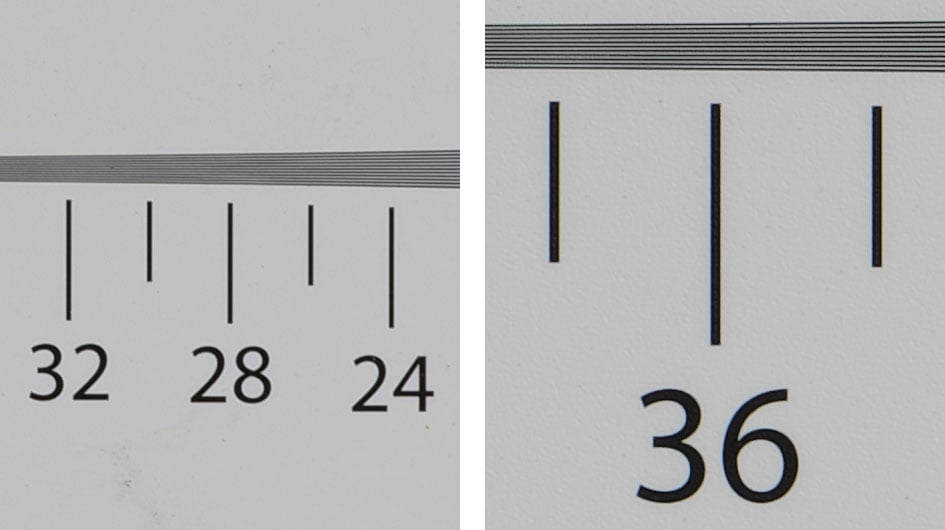
So is it any good? LET's start with a firmness of purpose chart shot from a tripod, and on the left is the native 24 Megapixel version, patc on the right is the composite 96 Megapixel version, and there's certainly a clear remainder 'tween them. This is the kinda surroundings the mode kit and caboodle best, capturing entirely static subjects from a tripod.
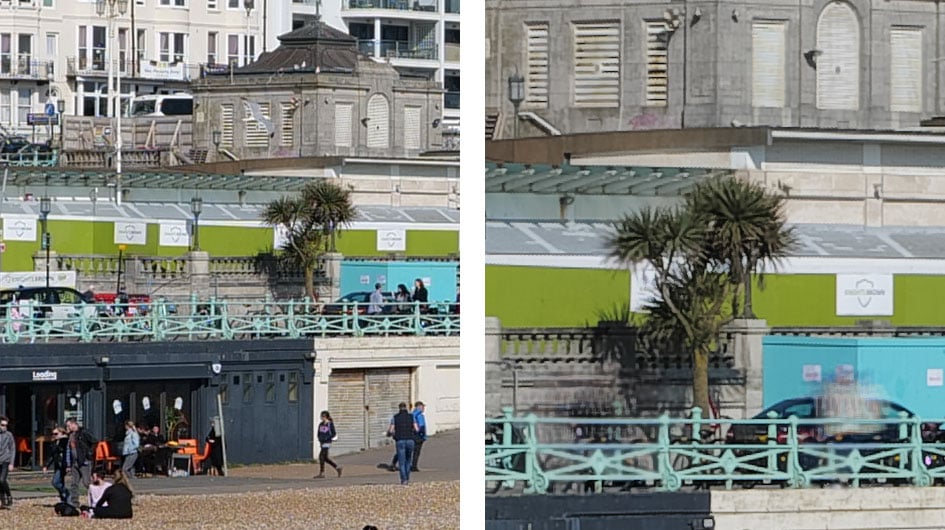
Now for an outside vista under rude light, again from a tripod, and once more on the left is the indigen 24 Megapixel interpretation and on the right the composite 96 Megapixel nonpareil. As before, in that respect's definitely greater detail resolved in the asterid dicot family version, although anything that affected during the capture period, such as people, cars Beaver State birds, is rendered with undesirable motion glaze over. Now this was shaft victimisation Mode 1 and Panasonic offers an alternative mode that's said to better care elements in motion, so I'll take a closer take the difference that makes in my S1R reappraisal. But for now I'm confident in saying it's a profitable tool in studio environments for boosting the effective firmness, and the only rival full-framer to presently offer anything exchangeable is the more expensive Sony A7r Trine.

The Lumix S bodies also inherit 4K and 6K Photograph modes first off seen on the Lumix G cameras, which allow you to pull JPEG photos from bursts of high schoo resolution telecasting. There's three main modes on tender: 4K Photo at 30fps, 4K Pic at 60fps and 6K Photo at 30fps. The 4K Photograph modes captivate a cropped APSC area, whether at 30 or 60fps, and admit you to extract 8 Megapixel stills, while the 6K Pic mode employs a milder crop and lets you educe higher resolution 18 Megapixel images. In price of the recording method, you can choose to keep capturing while the shutter is held, start and stop transcription with a push of the shutter, or in my favourite mode, pre-ruptured which keeps a reverberating buffer of the last second's worth of footage while the shutter is half-pressed, before committing it and the consequent second's valuable after a full push – this allows you to efficaciously rewind from the point you pressed the button to capture something you just incomprehensible.

To demonstrate pre-collapse in action, present's a jibe I took earlier, ambitious the clit as the bird took escape. Archetypal you'll need to energy capable tell the camera to organize the file for navigation which takes a few seconds. Instantly take note of the enumerate at the overstep: the zero represents the moment I pushed the shutter fully and you backside see my reactions meant the bird on the left had long gone. However thanks to the pre-flare-up mode I can effectively go book binding one of these days by equal to unmatchable second, allowing me to capture the exact moment when the bird took flight, and at 30fps I have 30 images to take from. And so when I find the frame that I wishing, I can just push the button in the middle of the wheel to save a still JPEG photo, at 8 Megapixels if I used 4K Photo or 18 Megapixels in 6K Photo. And I can appropriate as many frames as I want from this sequence, either like a sho operating room when I playback the file later. The biggest limitation is 4K and 6K Photo use the movie focal point capabilities which aren't as quick as those for stills in AFC, but for action that's non moving particularly quickly towards or outside from you, it's a worth feature to have at your administration and something that's non available on other full-framers.
Confirmation prices along the Lumix S1R at B&H, Adorama, or Wex. Alternatively get yourself a copy of my In Television camera book or treat me to a coffee! Thanks!Pages: 1 2 3 4
Panasonic Lumix S1R review
Source: https://www.cameralabs.com/panasonic-lumix-s1r-review/
